
Eliminate Playing Yips
Inside Golf Australia Interview - August Edition 2026
The swings of left-handed golfers somehow seem more elegant, more graceful, than those of the right-handed majority, but does playing from the wrong side give golfers any sort of advantage?
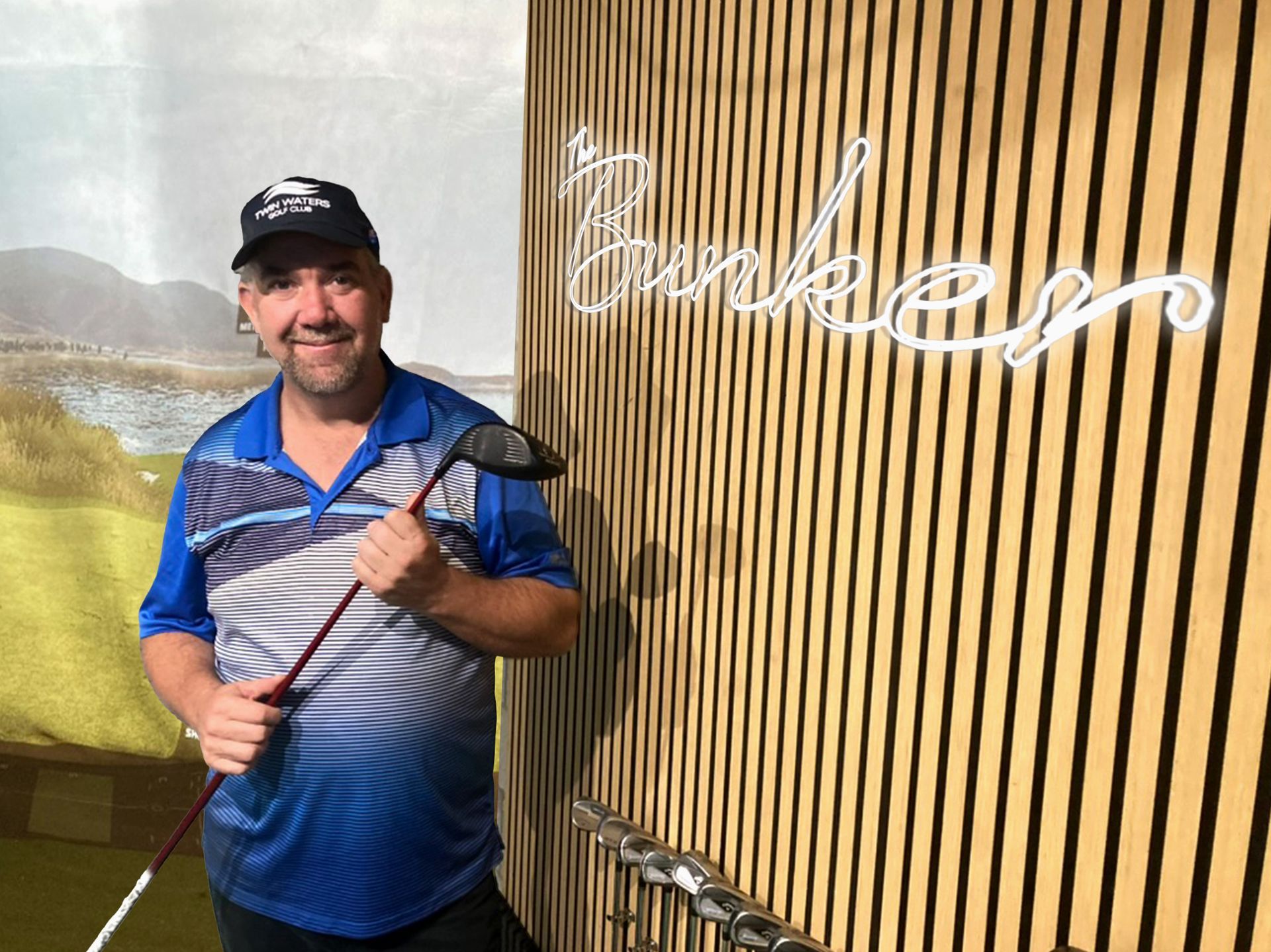
Sunshine Coast golfer Greg Spence put it to the test a few years ago when he made the most fundamental of changes to his swing and taught himself to play left-handed.
Spence, a professional musician who had been a self-confessed hacker playing golf right-handed for 30 years, wanted to understand how humans actually learn.
Using the principles of neuroplasticity — a term that refers to the brain’s remarkable capacity to change and adapt in response to experiences, learning and environmental changes — he spent more than six months relearning how to play the game left-handed.
He practiced nearly every day. Then he went out and won the B grade club championship at Peregian Springs Golf Club.
Five years later, Spence is still playing golf — right-handed again, because he says it feels more natural and doesn’t take quite the same concentration.
But he says he’s proved the effectiveness of his experiment, and is now taking his theory to a wider audience, helping musicians and athletes recover from career-threatening performance disorders.
And he’s convinced those same principles can improve everybody’s golf game, and eradicate the dreaded yips — the sudden loss of control as a golfer makes a putt.
“Many people think the yips are caused by a lack of talent, confidence or mental toughness,” Spence said. “What I’ve discovered is that these issues are actually learning problems disguised as performance problems.”
He talks about a person’s fear of failure and the brain stopping through a “threat detection process.” He likens the yips in golf to a dart player becoming so traumatised he can’t release the dart, or a major league baseball pitcher who finds it impossible to let go of the ball.
Spence says all golfers know the feeling of missing a putt they should have made, and of making a poor swing on the tee, just as they recognise the feeling of a shot well played.
His message is simple — if the brain learned the problem, the brain can learn a solution.
He talks about simplifying an otherwise complex process, putting drills together and practicing the motions until they become second nature. Process, he insists, rather than positive thinking, is the solution.
Spence’s learning theory recently took him to New York, where he spoke at the International Trumpet Guild Conference — one of the world’s largest gatherings of elite brass performers and educators.
Spence was not out of place in such company. One of Australia’s finest trumpet players, he has shared the stage with stars like Shirley Bassey, Michael Bublé, Wayne Newton and K. D. Lang, and has appeared on Dancing With The Stars, Hey Hey It’s Saturday, the Logie Awards and Channel 9’s Carols by Candlelight.
He told delegates about his principles of learning, neuroplasticity and performance psychology to help musicians recover from Musician’s Focal Dystonia — a devastating neurological condition often compared to the yips in sport.
For musicians, focal dystonia can mean the sudden loss of control of highly trained movements that have been performed effortlessly for decades. For many, it ends careers.
His work has attracted musicians from around the world who had been told recovery was unlikely. Through his programs, many have returned to performing after years of frustration and failed treatments.
More recently, athletes suffering from performance blocks, anxiety and yips-like symptoms have begun reaching out after recognising similarities between their own experiences and those of the musicians Greg has been helping.
Spence’s unique philosophy has now expanded beyond music and sport through an initiative to help performers, executives and athletes better understand how pressure affects performance and how to build genuine confidence through process rather than positive thinking.
He has launched a website, panicperformance.com, where he hopes to help people overcome fear, self-doubt, overthinking, and performance breakdowns — including the yips.